

What Is A Tender Perennial Plant?
Perennial, annual, bi-annual – you may be wondering what do these words even mean? I know that when I first started to get serious about gardening, the different terms applied to the packets of seeds I had sat staring at caused me great confusion.
So today I’m going to walk you through what a tender perennial plant is, how tender perennials compare to hardy perennial plants as well as five easy tender perennials that beginners can start with.
What Is The Difference Between Annual And Perennial Plants?
The difference between annual and perennial plants is pretty clear:
- Annual plants only live for one season. Once that season is over, the plant will die.
- Perennial plants are a type of flora that bloom for multiple seasons.
Annual plants will also usually bloom for the entire season until winter. Once annual plants die, they typically leave seeds that will grow next spring.
With perennial plants, their blooming period typically doesn’t last as long as annual plants and will only flower for short periods intermittently, but will keep returning.
What Is A Perennial Plant?

Perennial plants bloom for multiple seasons. In many cases, plants that fall into this classification are also considered to be cold-hardy and will reactivate again after winter. Perennial plants bloom once for one season each year, typically during spring, summer, or fall.
There are sub-categories of perennial plants that experience long-blooming periods and other variants that will re-bloom multiple times per year.
While perennial plants bloom multiple times, proper care is still required if you wish to maximize their lifespan. This type of plant will eventually wither over time, with the average lifespan clocked at around three to five years max.
When it comes to their care and maintenance, different perennial plants will demand extra care and maintenance methods. There are low-maintenance plants, and some will require to be regularly pruned to keep them in tip-top condition. A bit of research is always recommended before starting your garden with specific plant types in mind.
Why Choose Perennial Plants?
There are several advantages to picking perennial plants for your garden. Here are some factors you should keep in mind if you are still contemplating whether to add them to your garden.
Most perennial plants require less water once they are established in the soil. This is a welcome trait in drought-prone areas.
Despite perennial plants being more expensive initially, they have the potential to be a really good investment due to their multiple blooming opportunities. Propagating perennial plants is also relatively simple.
What Is A Tender Perennial Plant?
Tender perennial plants blur the line between annual and perennial. Floras that fall under the tender perennial category are generally native to tropical and warm climate regions. Within this environment, these plants grow as perennials. However, if the tender perennial plant is transported somewhere cooler, the tender perennials will transform into annuals.
Examples of tender perennial plants
Listed below are some examples of tender perennial plants for your reference. These are the most common and popular floras that fall under this description:
- Alocasia
- Begonias
- Bay Laurel
- Caladium
- Calla Lilies
- Cilantro / Coriander
- Colocasia
- Dahlia
- Rosemary
Another important note when growing tender perennial plants is that if you do so indoors, you must replicate its natural environment as closely as possible.
This could mean you will need to increase humidity and temperature within its artificial habitat – especially if you live in regions that experience harsh winters.
Do Tender Perennial Plants Come Back Each Year?
Yes, technically, tender perennial plants do come back each year, but only if they are cared for and maintained correctly whilst they are in a dormant state.
This aspect is one of the most significant differences between a tender and hardy perennial. Unlike their tougher hardy cousins, tender perennials cannot survive winter on their own, they require the help from a gardener.
How Long Does A Tender Perennial Plant Live?
Since tender perennials still fall under the yearly classification, it is a plant that can live for several years, as long as it is planted in the proper environment. So, if we take into consideration that the tender perennial plant is placed in the appropriate setting and is given the proper care and maintenance – this plant should live for more than two years.
Tender Perennial vs Hardy Perennial
The main difference between the tender and hardy perennial plant boils down to its ability to withstand varying degrees of environments. For example, hardy perennial plants can withstand colder climates, while tender perennials won’t survive temperatures south of 1°C. It is therefore best to keep tender perennial plants out of freezing temperatures.
As for hardy perennial plants, these floras have a high rating in the hardiness zone. Most will be able to survive and thrive in low to average temperatures to sprout back up once spring sets in. The toughness and survival of a hardy perennial will depend on how strong its roots will be able to set in during the first year. A robust root system is one of the critical qualities of the hardy perennial plant. It is the primary reason for its ability to withstand harsh conditions that tender perennials cannot.
All in all, hardy tends to be the better choice simply because it is easier to care for than tender perennial plants if you live around the Northern hemisphere. That said, several great plants are categorized as tender perennials, and the challenge of growing them is well worth the effort once they bloom.
Five Easy Tender Perennial Plants To Grow For Beginners
Below are some of the best tender perennial plants to grow for beginners. Even if you live in colder regions, these tender perennials prove to be just tough enough to survive even with a bit of help from the gardener.
1. Bay Laurel

Another fragrant shrub that is also a popular seasoning, bay laurel, is a staple in a lot of Mediterranean dishes, such as many local soups and stews. The bay laurel features dark and almost leathery texture leaves. The bay laurel is also considered one of the oldest cultivated trees in history.
I have a popular article looking at whether my bay tree was dying a couple years ago that you may find interesting if you’ve never taken care of a bay tree.
2. Begonias
Native to humid tropical countries, begonias were one of my Mum’s favorites! They bloom in shades of pink, yellow, red, orange, and white. This is an easy perennial plant to grow, especially when growing it from corms.
Place begonias in a shallow tray filled with a mixture of damp peat and compost during the onset of spring and then once the weather is more to the begonia liking, you can transport it outdoors.
3. Caladiums

Caladiums feature lovely heart-shaped leaves and are tropical plants that grow with multi-colored foliage. Caladiums can have shades of green, red, white, or pink. It can be grown in containers or garden beds.
4. Calla Lily
The calla lily is a stunning plant known for its trumpet-shaped flower. Often symbolizing purity and faithfulness, the calla lily has seen its fair share of special occasions.
This perennial plant can be grown indoors if the temperature is too low and then relocated outdoors once spring arrives.
5. Rosemary
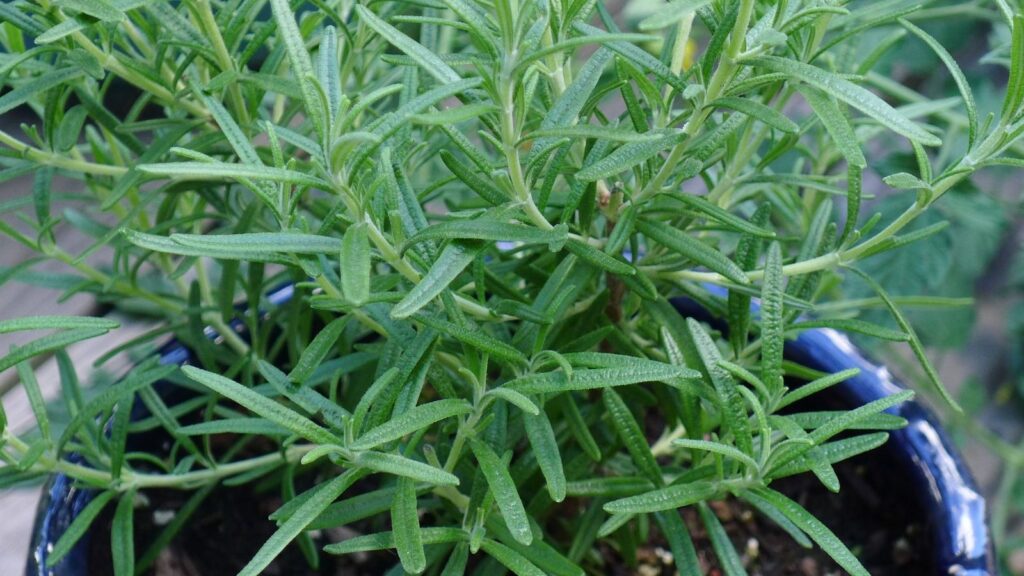
Rosemary is a fragrant perennial shrub that is distinguished by its needle-like leaves. Rosemary also blooms with an eye-catching blue flower that will undoubtedly enhance the look of any garden, both indoors and outdoors.
Rosemary is also a popular seasoning in many Mediterranean dishes, which is another reason to try growing these aromatic plants yourself.
Be aware that if you try to grow rosemary from seed yourself, it is quite tricky, and they do take some time to germinate. I have lost several seedlings grown from scratch due to lack of care when I have been away, and that’s for the few that did germinate.
Do read my article on growing rosemary in the shade, it this is a herb you’re interested in growing!


