

13 Easy Vegetables to Grow in Pots for Beginners
I’m currently living in a location which has no garden, so my years of growing vegetables in the ground has (for now) come to an end. But not to be thwarted – I love the taste of home grown vegetables too much to not continue growing them – I’ve invested quite heavily in terracotta pots of all sizes so that I can continue enjoying home grown veggies.
I’ve had some that were successful and some not so successful, which is why I thought I would share with you what I have found to be vegetables that you can easily grow in pots – perfect if you’re a beginner looking to get started! – and a number are vegetables that grow above ground.
It should be noted that container gardening does require more work. Especially if your location is suffering from continuous heat waves. And you don’t have a hose or have a hose pipe ban in place.
I have been watering my potted vegetable garden at least twice a day to keep the veggies in tip top condition, but doing so with a 1.5L watering can means many trips back and forth.
That said, I wouldn’t not do so. I chomped on my first radish yesterday and it was worth every moment invested in growing them, even if they were on the smaller side.

What You Need When Growing Vegetables In Pots
I feel it’s important to start with what is now obvious to me, but wasn’t when I started sowing my seeds – your vegetables will only grow as big as their container allows.
Having not experienced the container gardening side of growing veggies before, I was low on garden pots, with the majority of my stash around 4.5″ / 12cm in diameter and a measly 4″ / 10cm in depth. These are great for seedlings, but not so great for growing anything other than herbs.
A quick video call to my dad – who taught me much of what I know – and he reminded me that the tomatoes he grows outside of his greenhouse all require large pots to get the vast amount of tomatoes he harvests each year – so, your container size is super important!
So, to that end, here’s a good list of what I have been using to grow my vegetables in pots:
- Selection of pots or containers with drainage holes
- Potting soil or compost
- Selection of vegetable seeds (you can also buy the veggies as small plants and transplant them, but I love the joy of growing from seed
- Watering can or hose
Remember with timings mentioned for each that these are variable based on the growing season where you live – early spring for me is late february / early march while for others (looking at your southern hemisphere readers!) it could be September / October!
Now you’re ready to start building your vegetable container garden, let’s get started with the best vegetables for containers!
1. Asparagus

A highly nutritious and easy vegetable to grow in pots, the asparagus is a perennial, making it a valuable and productive plant to grow. In addition, asparagus is an excellent source of vitamins A, C, E, and K, as well as iron, copper, and folate.
Most people who grow asparagus do so from the crown, which are usually available when they are around the one year odl mark, but asparagus can also be grown from seeds if you’re happy to wait a full year before seeing anything worthwhile, but it can be another year on top before there’s anything worth harvesting.
If you do opt to start with asparagus, it is best planted during either spring or fall. Make sure to place the pot with the asparagus seed in an area with decent partial sunlight exposure.
As for the pot size, pick one where you can plant the seed at least 4-inches deep and put a 5-inch space between each seedling. Asparagus can live and produce for years, so make sure you plant it in a sturdy pot.
You can learn more about growing asparagus in a pot here!
2. Artichokes
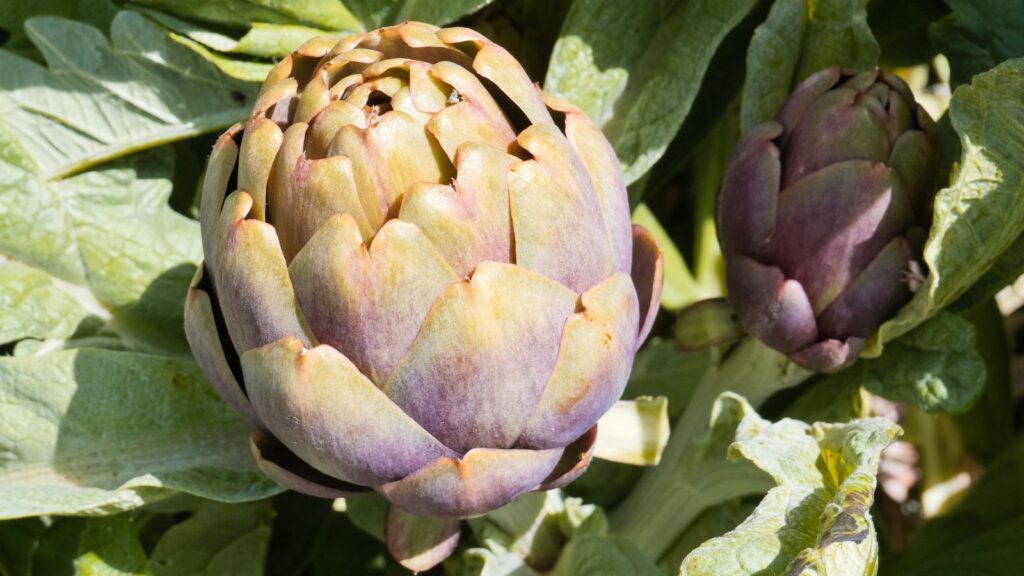
Another member of the perennial plant family, artichokes can live and produce for more than two years, making it a convenient choice for those who want to grow something that they can use down the line.
Artichoke is often a common addition to Italian cuisine and is usually baked as a culinary ingredient. This vegetable is also rich in vitamins C and K.
Typically, artichokes are planted during spring. However, in warmer climates, the artichoke is best planted near the end of the summer season.
You’ll want to start the seeds indoors as they do like a warm and moist environment. Once they have germinated and settled in you should get yourself a pot that can allow you to plant it at around 4 to 6-inches deep and water it twice a week. Harvest season will be in a little over three months.
3. Beans
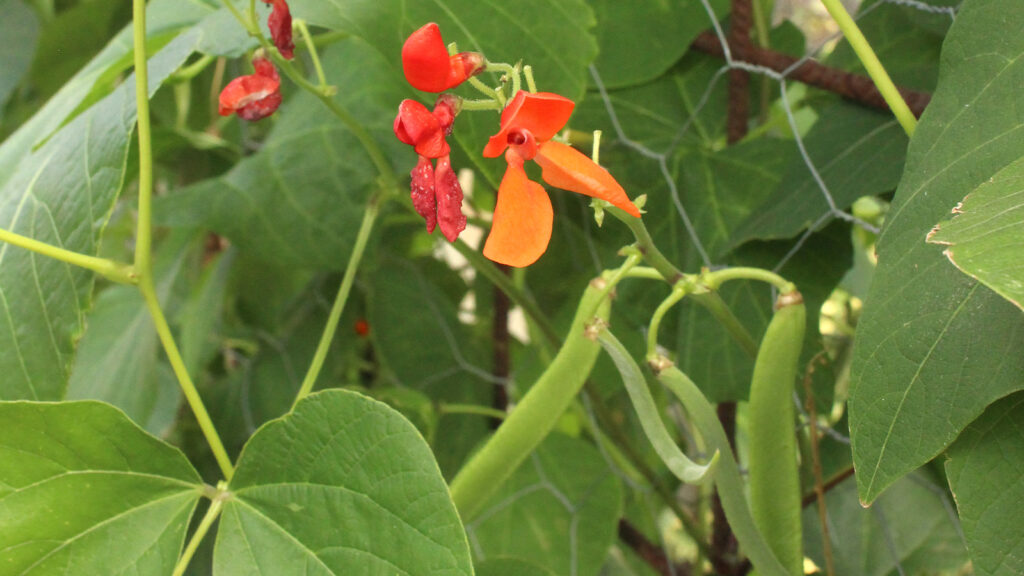
Beans are a relatively straight forward vegetable to grow in pots, though my dad is a big fan of growing runner beans in a garden bed for maximum harvest. That said, as these plants do like to climb all over the place as they grow, you’d be wise to place a lattice in your pot to keep its vines under some control.
There are different varieties of beans, and most, if not all, produce exponentially and quickly, making them a great entry-level vegetable to grow.
The only time I’ve seen beans not do so well is in extreme heat – like the 40ºc recently seen in the UK. My dad’s beans have come out not nearly as tender as they have been in previous years, instead they are hard and tough – and this in spite of plenty of watering during the heatwave.
Another benefit of planting leguminous plants like beans is that it produces ammonium nitrogen (NH4) which it releases into the soil. This will provide more than ample nutrition to other plants, particularly nitrogen-hungry green-leafy vegetables.
Make sure to use deep pots when planting beans so that the plant has sufficient room to anchor its roots. Also, legumes excel under full sunlight with well-drained soil, so best to position them where they can absorb optimum sunlight.
Bean Types
If you’re interested in growing beans in containers, then some of the best ones to start with are:
- Bush bean
- Broad bean
- French beans
- Green bean
- Pole bean
- Runner bean
4. Beets

This is my second favorite veggie to grow, because there is nothing better than a cheese and beetroot sandwich, eaten with beet warm from cooking and the bread freshly baked in the oven. Heaven!
Beets can thrive with limited space, which is why they made it onto the list. In fact, if you love them as much as I do, then beetroots are a perfect vegetable to grow in pots as they seem to prosper in these confined spaces.
While this vegetable isn’t as popular with most gardeners, there is no denying that it can provide fantastic benefits with its nutrient-rich composition.
This is a fast-growing annual vegetable which is adaptable and can grow anywhere with partial sunlight. However, early spring is the recommended time to start planting beets. Take note that beets must be planted at a considerable depth of about a foot (12-inches), so pick a deep pot if you decide on growing a batch of beetroot in your garden.
I started mine from seed in a seedling tray and then transplanted them to a deep terracotta pot when my compost and pots arrived. While the first batch weren’t as big as I hoped, they were certainly tasty, and I’ve since planted my second pot full!
It usually takes about 2-3 months to harvest your beets from containers.
5. Carrots
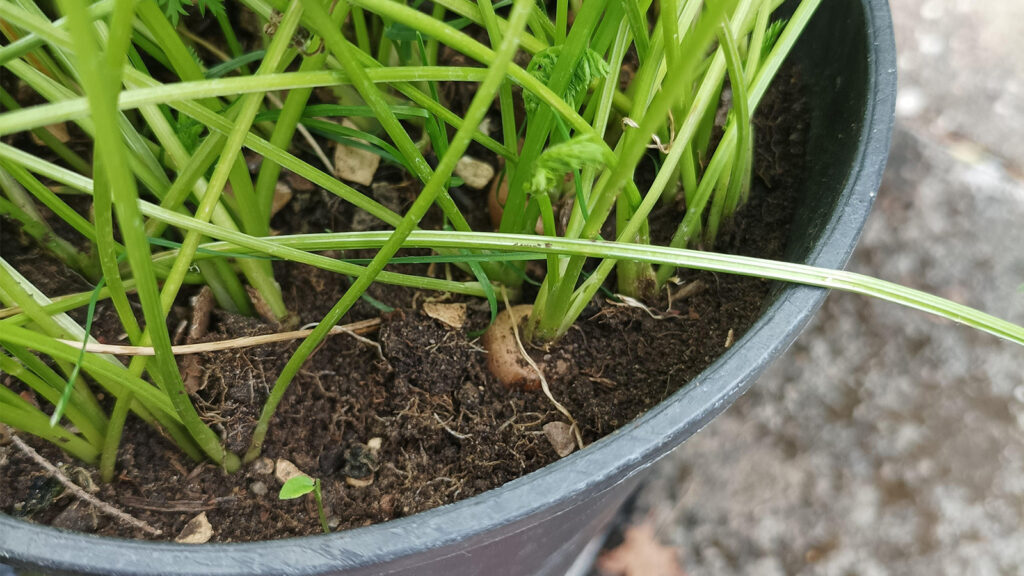
I grew up on freshly grown carrots, and in my family we refer to shop bought ones as ‘false carrots’, because the flavor is so different. To be fair, now it’s possible to buy a tasty carrot if you opt for organic versions, but I still think homegrown is best.
Despite being known to be best planted in the fields, carrots can also grow well in pots with the right basic knowledge. You should be aware of two carrots varieties before planting them in a pot. There are dwarf and large carrot types, so be sure to know which one you are growing to provide it with the appropriate pot size.
My dad used to grow his only in the ground, but the heatwave of 2022 means that his have been baked into the ground hard and so snap when he tries to get them out. Thankfully, he potted some in pots again, like last year! They were incredibly tasty and if you can gather plenty of deep pots, you’ll have a wonderful harvest of home grown carrots throughout the summer and autumn!
I’ve attached the photos of my Dad’s carrots in pots – next year I’ll be growing my own as I have missed out on the homegrown carrots this year. These are the pots I’ve ordered and will be using, in case you want to grab the same.
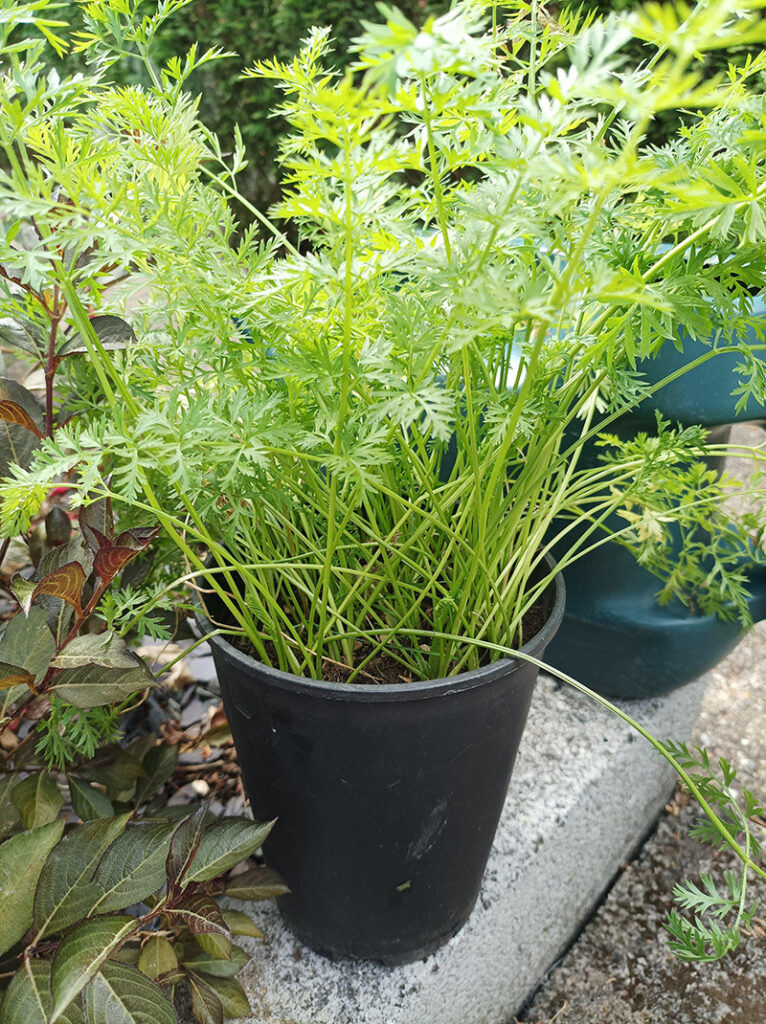
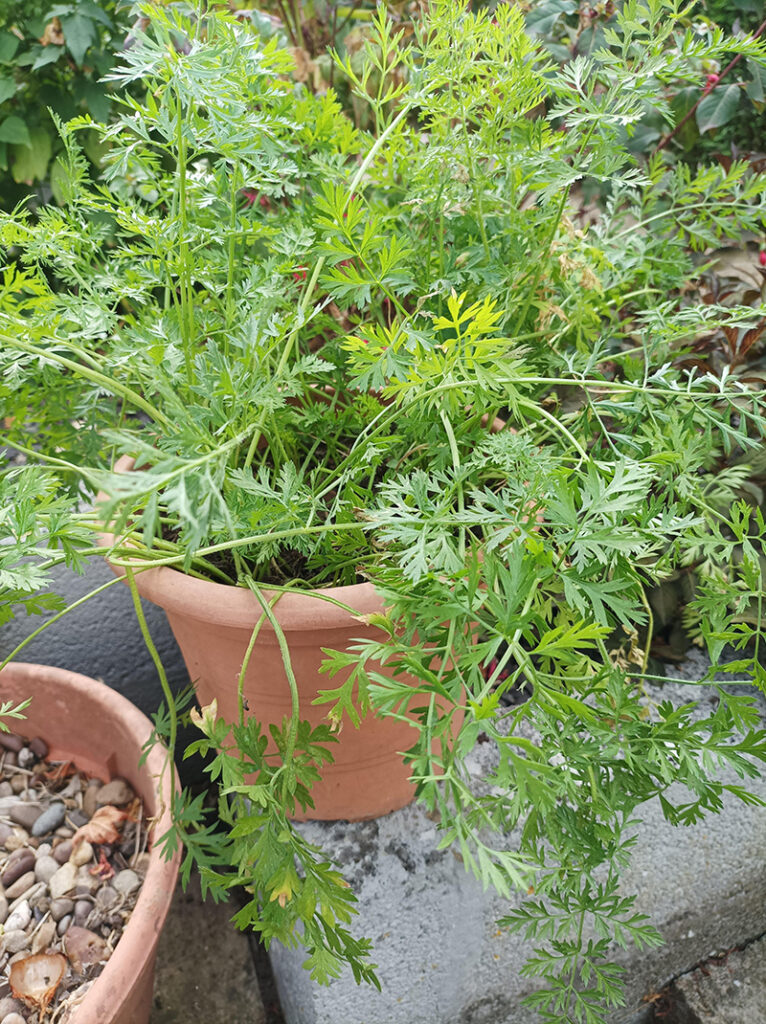
While carrots are considered cool season vegetables, they require being in a location that provides maximum sunlight. Also, carrots will require a considerable amount of water so make sure to water them at least three times a week – essentially you need to make sure that the soil doesn’t completely dry out!
6. Chili Peppers
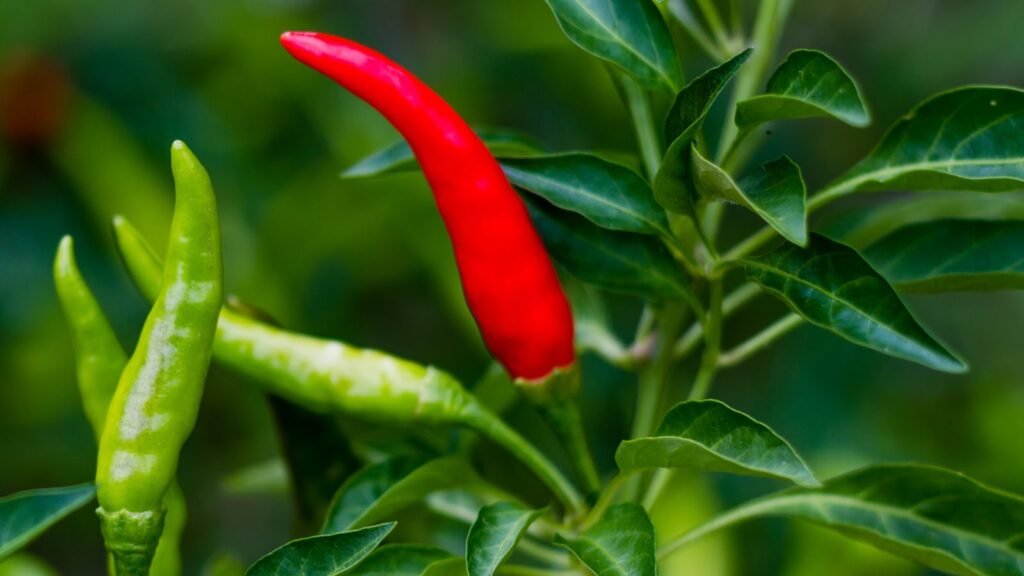
Do you love spicy food? Well, why not plant some chili pepper to have it on hand at all times? Chili is another vegetable that is relatively easy to grow. Peppers like Jalapeno are a classic member of several delicious salad ensembles that deliver just the right amount of that spicy kick.
When choosing a pot for your chili, choose one about a foot deep (12-inches). Jalapeno chili provides ample and regular harvest, with seedlings reaching maturity in just over three months. Make sure to place the pot under full sunlight as chili peppers thrive in warmer conditions. Additionally, the soil should be rich in nitrogen, phosphate, and potassium.
7. Cucumbers

Yes, I know what you are thinking, but based on the official culinary classification, cucumber is classified as a vegetable due to its application. With that out of the way, cucumber is a great vegetable to grow in pots due to its fast growth.
Cucumbers thrive when given plenty of water, and with proper care, each cucumber that you harvest will deliver that crunchy and refreshing quality that is synonymous with this vegetable. When growing cucumbers, it is best to use large pots that can retain moisture.
The cucumber is versatile as it can thrive in full-sun and partial-shade conditions. Just remember to plant them when the cold is thawing, and the weather is getting warmer. Also, deep watering once a week is advised, but more often if the weather is too hot or dry.
8. Kale

You may be familiar with kale as this dark leafy green vegetable became quite popular a couple of years back after being promoted by several celebrities. There is a basis for its popularity as this vegetable offers a good mix of nutrients, including protein, fiber, iron, and most vitamins.
Planting and growing kale are relatively simple, making it another good choice as an entry-level vegetable to grow in pots. You best start growing kale in spring or early summer so that you will be able to harvest by September. When growing kale, make sure to put it in a pot wherein you can plant it at about 6-inches deep – and it should be placed in an area with partial sunlight. Aim to water it three times a week.
9. Lettuce
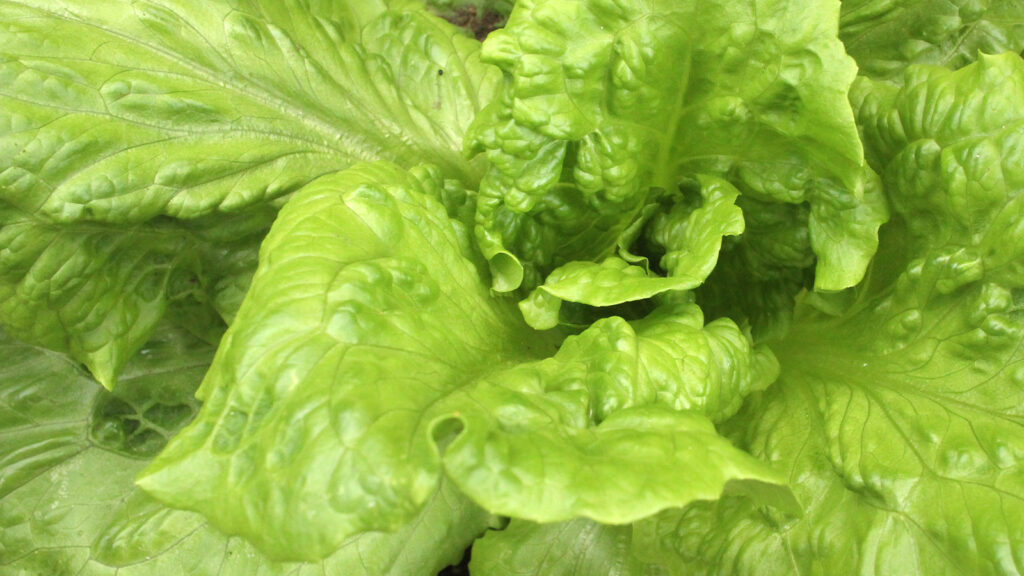
Not only is lettuce a great companion to a delicious and refreshing salad, but it is also a relatively easy vegetable to grow in pots. In addition, lettuce is an incredibly nutritious plant that flourishes in warm climates and is packed with calcium, potassium, magnesium, phosphorus, folate, and vitamins A, C, and K.
Lettuce is best planted in spring when it will take about a month to be ready for harvest. Choose 6-inch deep pots, and if growing more than one, make sure to give each at least 8-inches of space in between.
Lettuce will thrive under partial sunlight so remember to place the pot in a relatively shady area with just the right amount of light exposure daily.

There are other salad leaves that you can grow – my favorite is wild rocket – but I’ve left it at lettuce today because there are already so many lettuce varieties available that it would be silly to go into other salad leaves in this article.
10. Onions
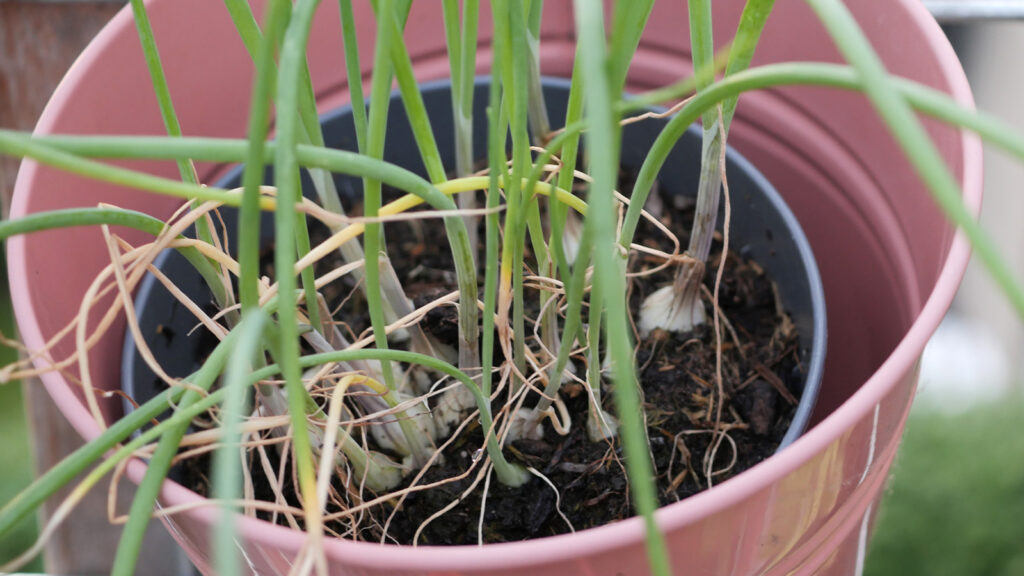
A key ingredient in most recipes, the onion is a relatively easy vegetable to grow for beginners. Save on your kitchen budget by growing your own onions at home. This vegetable thrives in cold weather environments and is best planted in spring.
Place your onion sets 6-inches deep with ideally a space of 6-inches apart. Water it once a week and keep the pot under full sunlight. Onions will be ready for harvest in three months, and you now have a fresh batch of key ingredients for your favorite recipes.
I myself only grow scallions / spring onions / green onions in pots, because I get more for the space, and I love to use them in cooking and salads, though I do sometimes forget to harvest them when perfectly ready and end up losing the green tops. The onion bulb is still very tasty though!
11. Potatoes
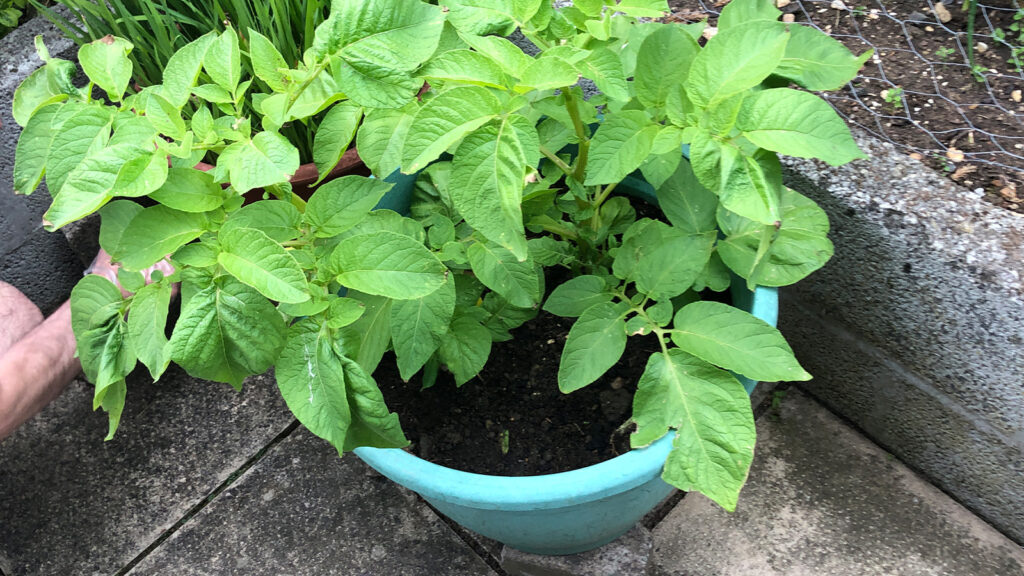
It goes without saying that potatoes are one of the easiest vegetables to grow in pots! Even my non-green fingered cousin Amy succeeded last year and sent me messages of joy when she harvested their one container and found about 30 small potatoes.
Growing potatoes requires a container that is wide and deep enough – you can buy these special potato planters which help you easily assess whether the plant is ready for harvesting.
They can be grown in sunlight and partial shade and require plenty of watering!
One thing to note is that when you do pull your plant to harvest the potatoes, if you have smaller ones that are too tiny, you can replant the plant for a later crop! This happened earlier this year when I was back home visiting my dada. We excitedly pulled the biggest pot, expected dozens of fully grown spuds, and were left disappointed by how few there were. They were incredibly tasty – you cannot beat an early potato that is home grown! – but with so few that had fully grown, we opted to put the plant root back in its container once we had grabbed the big ones, and later in the summer my Dad was able to enjoy another few meals of fresh potatoes. Win!
12. Radish

Are you looking for an easy and fast vegetable to grow in pots? Radishes will be ready for harvest within a month after planting. Truly! I thought I had missed the boat, because my seeds took so long to arrive – I had forgotten to order them in my first batch! – but I whacked some seeds into a pot in late July and ate my first radish yesterday! Yum!
Additionally, radish aren’t picky regarding the size of its pot, as they can easily thrive in smaller spaces. To be precise, you can plant radish in a pot as long as the seed can reach a depth of at least 4-inches.
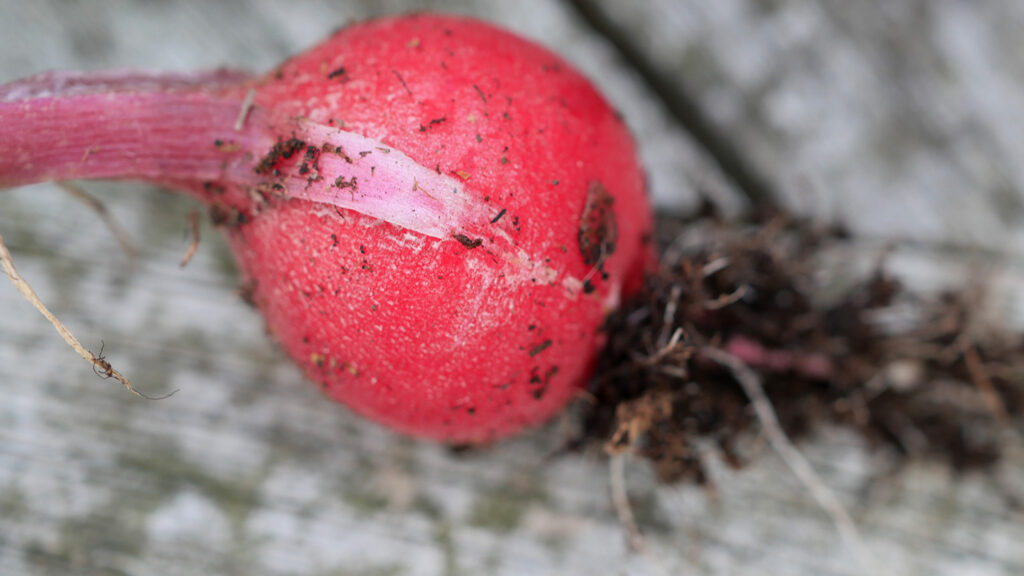
Radish also flourish in cooler conditions so planting it in a pot does give you the benefit of mobility. Give it enough full-sunlight exposure, or keep it in a partially shaded location; either way is acceptable. During the hot summer days, it is best to help the radish cool off by watering it a couple of extra times per week – though I have been watering mine on a daily basis to be sure.
Something to note…
The cabbage white butterfly will cover it in eggs if you’re not careful!
13. Tomatoes

Another firm favorite in our household. Whether you eat them raw in salads (or as they come straight from the plant!) tomatoes are somewhat ever-present in most popular dishes, are relatively easy to grow in pots and an excellent source of vitamins C and K, as well as folate and potassium.
Tomatoes can grow unhindered and to their full potential in a large pot. While it is possible to grow a tomato plant in a pot with a 9″ / 23cm diameter – I know, because I did so this year – at the very least it is best to use a pot with an 18-inch to 24-inch diameter for tomatoes (or at least a five gallon container / pot) per plant, and it goes without saying that if you have space for bigger, all the better.
Using containers that are this size will give the plant sufficient space to grow. Smaller space means that the fruit from the tomato plant will be smaller, and you’ll likely have less trusses too.

Finally, since tomato plants can produce a considerable amount of fruit to harvest, make sure to use poles or stakes to provide the plant with extra support and keep it from bending.
I only grow cherry tomato varieties as the flavor is sweeter and more intense in my experience – and you can see how my limited staking has allowed the plants to be wild and bendy!
As for the environment, tomatoes thrive under warm, full sunlight – I have noticed a discernible difference between two plants that were placed at different ends of my terrace, which receive differing amounts of direct sunlight per day. For this reason it is advisable not to plant tomatoes during colder seasons as they won’t be able to grow to their full potential.
And let’s also address a particular elephant in the room – yes, tomatoes are technically categorized as a fruit. However, the U.S. Supreme Court ruled that tomatoes should be classified as a vegetable based on their culinary application back in 1893!
If you love tomatoes but are worried about a certain bird stealing them, you can always stop pigeons from eating your plants!
Other Options For Container Vegetable Gardening

This is the list of thirteen that I have experienced at some point in my life but there are other options for container vegetable gardening that may be more exciting to you. Here’s a small list for you to look into:
- Bell pepper
- Eggplant / aubergine
- Peas
- Sprouts (the brussel type)
- Summer squash
In fact, I have already set my brussel sprout seeds and am nurturing the two lone plants that survived – I’ll write a separate article on the process of growing brussel sprouts from seeds so you can follow along too!
I do hope you enjoy vegetable gardening as much as I do. Starting with pots is an easy way to dip your toe (fingers?) into the world of veggie growing, and who knows, you might end up with a vegetable harvest bigger than mine next year!


